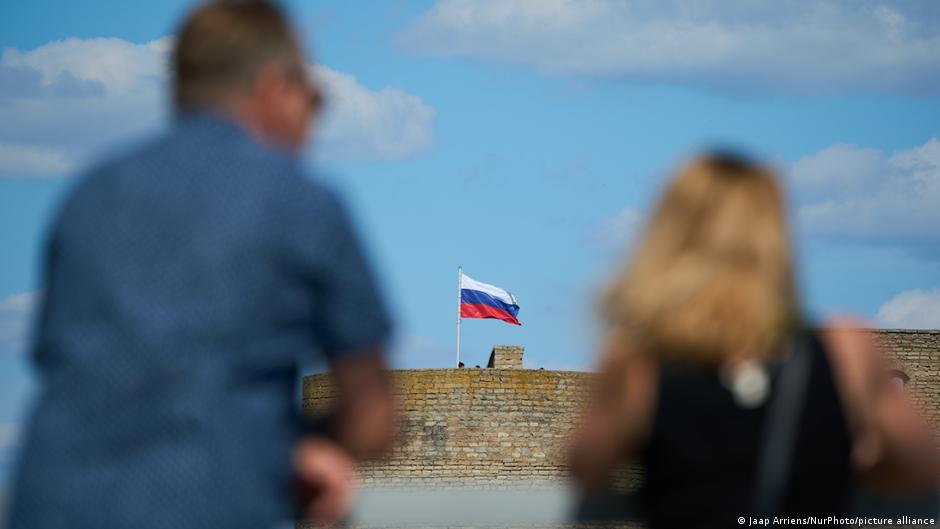
Social media has pushed claims that Estonia’s border city Narva wants to secede and join Russia. Estonian intelligence calls the posts provocative, while residents and officials say life goes on and there is no real separatist movement.
Claims that Narva, an Estonian city on the Russian border, is preparing to secede and form a so-called "People's Republic of Narva" have been circulating on social media and Telegram. The posts include a proposed flag and coat of arms and mirror imagery used in past pro‑Russian campaigns. Estonian intelligence has described the rumours as provocative, and many locals dismiss them as nonsense.
Narva, home to roughly 52,000 people, is predominantly Russian‑speaking: only about 2% use Estonian at home and roughly a third hold Russian passports. The riverfront faces the Russian town of Ivangorod, and crossing the border on foot remains a part of daily life. Observers note the demographic similarities to contested regions elsewhere, but local reporters and officials say there is no organised separatist movement.
At the same time Narva has strong ties to the EU. In September Europe’s largest rare‑earth magnet factory opened there with EU funding, aimed at reducing dependence on imports. Residents point to visible differences in living standards across the border — a promenade built on the Estonian side is noticeably better maintained than the Russian stretch — as a reminder of the practical benefits of staying within Estonia and the EU.
Moscow has not forgotten Narva: President Vladimir Putin mentioned the city in 2022 when referring to territories captured by Peter the Great, and Russian organisers stage a May 9 festival on the Ivangorod bank positioned so people in Narva can see it. Still, local politicians and journalists say most people are more concerned about economic prospects and the city's image than about breaking away from Estonia.
Source: World | Deutsche Welle
Comments
Post a Comment